Showing posts with label theatre. Show all posts

Saturday, November 20, 2021

Snakes in a Play


Word has it that Shakespeare wrote one of his greatest plays, King Lear, while he was sequestered from the plague. Not to be outdone, I wrote two plays while sequestering from COVID-19. One of them was actually performed. And while it may not have the depth, power, or significance of King Lear, it has two advantages over it: it’s about 300 pages shorter, and there are snakes.

A year ago I was working on an interactive mystery script for a teacher friend’s drama class, when she informed me that the school would have to remain closed. Would it be possible to adapt the script so the actors could perform it remotely, via the Internet?

"No problem," I replied.

But there was a problem. How do you stage a murder mystery when the actors are all in different locations? I came up with what, in my humble opinion, is a pretty neat solution. And if you haven't figured it out (hint: “there are snakes”), the answer will be revealed in scene two.

Murder at Wonder-Comic-Alooza-Con

A Socially-Distant Murder Mystery

Cast of Characters:

CHRIS CARSON: panel moderator

VIVIAN HARDWICK: red-haired creator of Lady Raid and Black Flag, ex-wife of Roger Hardwick and soon-to-be ex-wife of Arthur Laine.

ARTHUR LAINE: creator of Waste Manager and Trashy, soon-to-be ex-husband of Vivian Hardwick

TINA RANDOLPH: actor portraying Jane Johnson, aka “Lady Raid”

PENNY BRIGHT: actor portraying Jane’s younger sister Jill, aka “Black Flag”

ROGER HARDWICK: actor portraying Donald Debris, aka “Waste Manager,” also ex-husband of Vivian Hardwick

BUDDY GRAY: actor portraying Randy Refuse, aka “Trashy,” Waste Manager’s young sidekick

Setting:

The setting is a virtual comic book convention panel discussion during the pandemic. Roger, Buddy, Tina, and Penny are wearing superhero costumes. Tina’s and Penny’s costumes have black capes, Roger’s has a red cape, and Buddy’s costume has no cape.

Scene 1: Introductions

CHRIS: Ladies and gentlemen, welcome to the final event of Wonder-Comic-Alooza-Con 2021! I’m Chris Carson, your moderator for tonight’s panel. And let me tell you, it’s a dandy. First, we have Vivian Hardwick, creator of Lady Raid and Black Flag. Hello, Vivian!

VIVIAN: Hello, Chris.

CHRIS: Also with us tonight is Arthur Laine, the man responsible for creating the popular Waste Manager and Trashy series.

VIVIAN: Ha! Arthur Laine never “created” anything. He stole every character and plot from somebody else.

ARTHUR: Red, this is neither the time nor the place…

VIVIAN: Don’t call me that!

ARTHUR: What, “Red?” You never used to mind it.

VIVIAN: I never used to mind milk, either—until I discovered that it made me physically ill. Funny—I discovered I was lactose-intolerant about the same time I discovered I was Arthur-intolerant.

CHRIS: Ha-ha. Ladies and gentlemen, as I’m sure you all know, Vivian and Arthur are not only former business partners, but former domestic partners. And Vivian was also once married to another member of our panel—Roger Hardwick, star of Waste Manager and Trashy—so this is sure to be a lively discussion. Now, although none of these people really need introductions, allow me to introduce the rest of our panel.

(As each actor is introduced, they strike a pose and say their catchphrase.)

CHRIS: Tina Randolph as Jane Johnson, better known as “Lady Raid”…

TINA: “Lady Raid’s here!”

CHRIS: Penny Bright as her little sister and pesti-sidekick, Jill Johnson, also known as “Black Flag”…

PENNY: “Bad guys check in, but they don’t check out!”

CHRIS: Roger Hardwick as Donald Debris, aka “Waste Manager”… (No response.) Roger? Roger, can you hear me? Roger, turn on your audio.

(Roger turns on audio, but turns off his camera.)

ROGER: Hello?

CHRIS: Well now we can hear you, but we can’t see you.

ROGER: Hello?

CHRIS: Roger, you need to turn your camera on.

ROGER: How’s that?

CHRIS: It’s still off.

ROGER: Is that better?

CHRIS: Still off, Roger.

ROGER: (He turns his camera on, but we only see the top of his head.) How about now?

CHRIS: Okay, the camera is on, but we can only see the top of your head.

(Roger adjusts the camera, but we still only see part of his face.)

ROGER: How’s that?

CHRIS: Good enough.

ROGER: Hello, everyone!

(There’s an uncomfortable pause.)

CHRIS: Go ahead, Roger.

ROGER: Go ahead with what?

CHRIS: Your catchphrase?

ROGER: Oh, right. “It’s time to take out the trash!” How was that?

CHRIS: Great, Roger, great. Finally, we have Buddy Gray as Randy Refuse, or “Trashy.”

BUDDY: “Good riddance to bad rubbish!”

CHRIS: Since we’ve broached the subject, now is as good a time as any to discuss the rise and fall of VivArt Comics. And who better to talk about the historic pairing of Vivian Hardwick and Arthur Laine than the person who introduced them to each other? Our final guest this evening is the award-winning artist who brought many of your favorite comic book characters to life, including Lady Raid, Black Flag, Waste Manager, and Trashy. Ladies and gentlemen, it gives me great pleasure to introduce Frank Kirby!

(No response. He gives the cue again.)

CHRIS: Here he is, Frank Kirby!

(Still no response.)

CHRIS: Well, apparently Frank is having technical difficulties. Arthur, I was hoping to talk to you and Frank about the new project you’re working on together. Perhaps you can tell us a little bit about that?

ARTHUR: Well, I don’t want to give too much away, but we’re planning to add a new character to the Artistic universe, beginning with the next issue of Waste Manager and Trashy.

VIVIAN: And tell us, who did you steal this idea from, Arthur?

CHRIS: I should point out, for those of you who are unaware of the fact, that Vivian is not only suing Arthur for divorce, but for “Theft of Intellectual Property.” I don’t suppose your lawyers will allow either of you to comment on the lawsuit?

ARTHUR: That’s correct, Chris. No comment.

VIVIAN: Oh, I could give you plenty of comments. However, because this is a family event, I will restrain myself. However, perhaps no one would object if I quoted something from Shakespeare?

ARTHUR: Go ahead, Vivian. You always were a show-off.

VIVIAN: Me? I’m a show-off! This from the guy who thinks he has to imitate Darth Vader every time he puts on a mask. (putting her hand over her mouth) “Luke, I am your father.” It gets old, Arthur.

ARTHUR: As do you.

VIVIAN: Why you, you… “Thou subtle perjur’d, false, disloyal man!”

ARTHUR: Very good! Is that from Richard III?

VIVIAN: No, The Two Gentlemen of Verona.

ARTHUR: See what I mean? Why do English majors feel they have the right to bore everyone to death with Shakespeare?

VIVIAN: Oh, shut up, “You poor, base, rascally, cheating lack-linen mate!”

ARTHUR: Henry IV, if I’m not mistaken.

VIVIAN: Part two.

ARTHUR: Are you finished?

VIVIAN: Just one more, from King Lear: “Thou art a boil, a plague sore, an embossed carbuncle.”

ARTHUR: Ah, “the rule of three.” Well, here’s one for you, Red: “Thou art wasting thy breath, which be no great loss.”

VIVIAN: I don’t recognize that quote. Is it from one of the history plays?

ARTHUR: A comedy: Monkey Business.

VIVIAN: That’s not a Shakespeare play.

ARTHUR: No, it’s a Marx Brothers movie.

VIVIAN: Philistine!

ARTHUR: Snob!

CHRIS: Er, let’s get back to this new character. Anything else you can tell us, Arthur?

ARTHUR: Well, as I was saying, they will make their first appearance in the next issue. On television, they will be introduced in the next crossover episode, which will hopefully air next year. We plan to eventually spin them off into their own series, both in the comics and on television. Like I said, I don’t want to give too much away, but I can tell you that the character is complex—a bit of an anti-hero. “Ambiguous” would be a good word to describe them.

CHRIS: You’re being pretty ambiguous yourself, with your pronouns. You’re not even going to tell us if it’s a man or a woman?

ARTHUR: (smiling) No comment.

CHRIS: And what about the crossover episode. Can you tell us anything about that?

ARTHUR: Not really, no.

CHRIS: How about you, Vivian? Can you tell us anything?

VIVIAN: Nothing—other than the fact that, if it were up to me, there wouldn’t be another crossover. Ever.

CHRIS: Okay. Well, this might be a good time to take break, and I’ll see if I can find out what happened to our missing guest, Frank Kirby. Maybe he can tell us something about these exciting changes coming to the Artistic and Vivacious Universes.

ARTHUR: I wouldn’t count on it.

[Some comic-themed entertainment might be provided during what, under normal circumstances, would be the dinner break. Possibly guests could participate in a costume contest, with a small prize.]

Scene 2: Panel Discussion

CHRIS: Hello everyone, and welcome back to our panel discussion. I’m afraid I have to start things off with some bad news. Frank Kirby is dead.

PENNY: Jeepers!

CHRIS: This isn’t a comedy bit, Penny. Frank really is dead.

PENNY: Golly, Chris. I’m sorry. I wasn’t trying to be disrespectful.

TINA: Yeah, she always talks like that.

CHRIS: Really! I’m sorry. It’s just that I’ve never heard anyone use the word “jeepers” in real life. It sounds like something your character would say.

PENNY: There was no swearing allowed in our house when I was a kid. My parents had a list of G-rated words we would use instead. They came in handy when I auditioned for the part of Black Flag.

TINA: You should hear her when she’s really upset. It’s freakin’ hilarious.

PENNY: Tina, how many times have I told you not to use the ‘F’ word?

TINA: About the same number of times I’ve told you that “freakin’” is not the ‘F’ word.

PENNY: I don’t care. I find it offensive. The only ‘F’ word I find acceptable is “fun.”

TINA: Well, “fun” you, Penny.

CHRIS: As I was saying, Frank is dead. It looks like murder, which means all of you are suspects.

PENNY: Cheese and crackers! How did it happen?

CHRIS: The police haven’t determined the cause of death, but near the body they found an open box, a black cape, and a note reading: “Karma bites, doesn’t it?” The note was signed, “R.H.”

ROGER: Say, doesn’t Lady Raid wear a black cape?

TINA: So what? Just about everyone in this business wears a cape, including you.

ROGER: Not everyone wears a black cape. Mine is red, like Superman’s.

BUDDY: I’d like to point out that I don’t wear a cape.

TINA: Who cares, Garbage Boy?

BUDDY: It’s “Trashy,” and I just wanted to point out…

CHRIS: Okay. We’ve established that Trashy doesn’t wear a cape, and that Waste Manager wears a red one…

ROGER: Like Superman.

CHRIS: Like Superman.

VIVIAN: Roger, are you also “faster than a speeding bullet?” Because some of us here might like to test you on that.

CHRIS: …but the fact is that only two people on this panel wear black capes: Tina and Penny.

TINA: Yes, and we’re currently wearing them.

(Tina and Penny show their capes.)

ROGER: They probably have a spare, like I do. It’s usually at the cleaner’s.

BUDDY: I keep telling you not to eat in your costume.

(A chorus of dings signals that all of the actors have received a text.)

CHRIS: That’s weird. It sounds like we all got messages at the same time. Mine says… (looking at phone) “Now that you’ve heard the awful news, you could probably use some clues.” It’s from an unknown number, and it’s signed “R.H.”

VIVIAN: (looking at phone) Mine says, “Ask Arthur about Tina,” also signed “R.H.” What’s going on between you and Tina, Arthur? And what does “R.H.” stand for—“Rotten Husband?”

ARTHUR: I, er… We… That is, Tina and I…

TINA: Look, Vivian. I’m sorry. I don’t know what I was thinking, but Arthur and I had an affair. I immediately regretted it, and now it’s over.

BUDDY: Well, I guess that explains my message that says, “Ask Tina about Arthur.”

VIVIAN: I knew there was someone, but I never dreamed it was you, Tina. I must say I’m surprised. I thought you had better taste. When was this?

TINA: Last spring, just before the lockdown.

ARTHUR: You remember, darling. It was about the same time I discovered you were having an affair with Frank. Like Frank’s note said, “Karma bites, doesn’t it?”

TINA: Ouch. And I guess that explains my message: “Ask Vivian about Frank.”

ROGER: Tina, I’m shocked. What about us?

TINA: What on earth are you talking about, Roger?

ROGER: Remember? That last crossover episode?

TINA: Roger, that was our characters. That wasn’t real life.

ROGER: Oh, right.

CHRIS: Penny, what does your message say?

PENNY: I’d rather not say.

TINA: Come on, Penny. Give.

PENNY: It says, “Ask Penny about her church.”

CHRIS: Tell us about your church, Penny.

PENNY: I’d rather not.

CHRIS: It might provide a clue to Frank’s murder.

PENNY: Well not that it’s anyone’s business, but as a matter of fact, I don’t attend a church.

TINA: It probably means the church you were raised in. She was a Pentecostal.

PENNY: Thanks a lot, Tina!

TINA: Sorry, Penny, but I figured everyone knew about it. It was in People magazine.

CHRIS: Pentecostal—isn’t that the one where you speak in tongues and handle snakes?

PENNY: Some do—not all. Anyway, I left the church years ago.

CHRIS: Roger, what does your text message say?

ROGER: What text message?

CHRIS: The one you received from R.H.?

ROGER: Oh. Let’s see. (looks at his phone) It says, “Don’t forget to pick up a loaf of bread.” Oh, wait. That’s from my wife. Here it is: “Ask Buddy what he saw in Arthur’s office. R.H.”

CHRIS: What did you see in Arthur’s office, Buddy?

BUDDY: Well, I’m guessing it refers to the time I walked into Arthur’s office when he was alone with Penny.

VIVIAN & TINA: What?!

PENNY: Shipoopi!

VIVIAN: They keep getting younger and younger, don’t they, Arthur?

TINA: Hey! I’m a year younger than Penny!

VIVIAN: Sorry, dear, but you do look older.

CHRIS: I think that just leaves Arthur. Arthur, what was your message?

ARTHUR: “Who inherits the businesses? R.H.”

CHRIS: I assume the businesses are Artistic and Vivacious. Care to answer the question?

ARTHUR: Well, Frank was a partner in both companies, so when he died, his shares went to Vivian and me. And since we’re technically still married, if anything happens to me, Vivian inherits Artistic.

VIVIAN: And if anything happens to me, Arthur gets Vivacious. I need to make a note to change that as soon as possible. I certainly don’t want him getting his grubby little hands on Lady Raid and Black Flag. Oh, wait—you already had your grubby little hands on them, didn’t you, Arthur?

CHRIS: Whoever this R.H. is, they seem to have a grudge against all of you. Can any of you think who it might be?

ROGER: Richard Harris?

CHRIS: The actor? He’s been dead for twenty years.

ROGER: Rex Harrison?

CHRIS: He’s been dead for thirty years.

ROGER: Rock Hudson?

CHRIS: Can anyone think of a living person with the initials R.H.?

ROGER: Sorry, I’m drawing a blank.

VIVIAN: Roger, darling?

ROGER: What?

VIVIAN: Your initials are R.H.

ROGER. Oh, right.

ARTHUR: Wait a minute… I think I know what “R.H.” stands for.

CHRIS: What?

ARTHUR: Red Heron.

BUDDY: I think you mean Red Herring, Arthur.

ARTHUR: No, Buddy, I mean Red Heron. We’ve had this discussion before.

BUDDY: But “Red Herring” is an expression. It means something.

ARTHUR: It’s a cliché, and it’s a fish. Whoever heard of a comic book character based on a fish?

ROGER: The Penguin?

ARTHUR: What?

ROGER: The Penguin from “Batman.”

ARTHUR: What about him?

ROGER: A character based on a fish.

ARTHUR: Roger, penguins are birds.

ROGER: Oh, right. They do eat fish, though, don’t they?

ARTHUR: Yes, they do.

ROGER: What about Aquaman?

ARTHUR: Again, not a fish.

VIVIAN: Ladies and gentlemen, my two exes. I sure can pick ‘em, can’t I?

CHRIS: I think we’d all like to hear more about this “Red Heron.”

BUDDY: Herring.

CHRIS: Or “Herring.” Arthur?

ARTHUR: It’s “Red Heron,” it’s the name of the new character we’re developing, and I think maybe Buddy and I have already said too much. Everyone at Artistic signed a strict non-disclosure agreement, including me. Isn’t that right, Buddy?

BUDDY: Yes.

CHRIS: Vivian, can you tell us anything?

VIVIAN: I’m afraid not. Everyone at Vivacious had to sign the same NDA when we signed the contract with Artistic. And believe me, if I could get out of that deal with the devil, I would.

CHRIS: Great. Listen, eventually you’re all going to have to talk to the police, and I’m pretty sure they don’t give a rat’s patootie about NDAs, so…

(A doorbell rings at Arthur’s house.)

ARTHUR: Excuse me. Someone’s at the door. I’m going to mute you for a moment.

(Arthur fiddles with his computer, then leaves. When he returns, he has a package. He begins talking, but since the sound is off, he can’t hear or be heard.)

CHRIS: What’s he saying? Arthur? Yo! Arthur! He must have turned off his sound instead of just muting us. (He puts his mouth up to the camera and enunciates each word, so that Arthur can read his lips.) Arthur. Turn. Your. Sound. On.

(Still speaking, Arthur begins to open the box.)

CHRIS: I have a bad feeling about this. (Again enunciating and speaking close to the camera.) Arthur. Do. Not. Open. The. Box.

(Arthur opens the box and removes a note. He reads it to us, but of course, we can’t hear him.)

CHRIS: Arthur! We! Can’t! Hear! You! Turn! On! Your! Sound!

VIVIAN: Oh, my. The suspense is terrible. I hope it will last.

(Vivian produces a bowl of popcorn and begins eating it, as if she were watching a movie. Arthur removes a black cape from the box.)

ROGER: That reminds me, my other cape should have been back from the cleaners’ by now. I’d better give them a call.

(A snake falls out of the cape. Arthur screams silently. Vivian continues to watch and eat popcorn. The others react with gasps and screams as Arthur wrestles with the snake. Penny lets loose a stream of G-rated profanity…)

PENNY: Oh sugar! Shadrach, Meshach, and Abednego! Cheese and crackers! Shatner! Oh fun! Fun! Fun! Fun!

(Arthur falls to the floor.)

VIVIAN: Well, now we know what happened to Frank.

CHRIS: Ladies and gentlemen, this concludes our panel discussion. We’re going to take a short break, and I guess I’ll be calling the police—again. You probably have questions for our panel; I know I do. Please submit them by [instructions on how to submit questions]. After the break, we’ll continue with the question and answer segment of the program.

[Break. Audience submits questions.]

Scene 3: Q&A

CHRIS: Ladies and gentlemen, welcome to the question and answer segment. Our panel—or what’s left of it—will now answer some of the questions you have submitted. But before we get to that, I have a question of my own. In light of recent events, I think it’s safe to say that we no longer need to worry about that non-disclosure agreement. Will one of you please enlighten us about this Red Heron character?

PENNY: Whew! Thank goodness I can tell you what that meeting with Arthur was about. We were not having an affair. Arthur called me to his office to tell me about this new character he and Frank had come up with. Originally, they planned for it to be a man, but they decided Waste Manager and Trashy needed a strong female character, and they wanted me to play her on television. That’s what the crossover episode was going to be about: Black Flag’s transformation into Red Heron.

CHRIS: I see. Did anyone else know about this?

VIVIAN: I knew, of course. I didn’t like the idea of losing Black Flag at first, but Arthur and Frank convinced me, and in the end I had to admit it was a great idea. Of course, that was before I found out that Arthur was cheating on me.

TINA: Are you kidding? Of course I knew about it. Penny couldn’t stop herself from bragging about getting her own show. Lucky bitch.

PENNY: Tina!

TINA: Oh, I’m sorry. Lucky “b-word”—not to mention “a-word” and “c-word.”

CHRIS: Roger? Buddy? Did you know?

BUDDY: Yeah, I heard enough of the conversation when I walked into Arthur’s office to figure it out.

ROGER: Nobody told me, but then nobody ever tells me anything.

CHRIS: Okay, let’s take a look at some questions from the audience.

(Chris reads questions from the audience. Hopefully, there will be some for each character.)

CHRIS: Well, I think I know who killed Frank and Arthur. Do you? Submit your solution—including who committed the murders, how they did it, and why—by [instructions on how to submit solution].

Scene 4: Conclusion

CHRIS: Ladies and gentlemen, it’s time to solve this mystery. Who killed Frank Kirby and Arthur Laine?

TINA: I hate to say it, but it must have been Penny.

PENNY: Me? You’re the one who had an affair with Arthur—probably with Frank, too. You, you…you scarlet woman!

TINA: Maybe so, but I’m not the one who grew up playing with snakes!

CHRIS: Ladies, please! I don’t believe either one of you is the murderer. Tina, you didn’t have a motive for killing Frank and Arthur. And Penny had even less reason to want them dead. Without them, there is no Red Heron, and she’s stuck playing your pesti-sidekick.

PENNY: Yeah. Fun me.

ROGER: What about Vivian? I was married to her for two years, and I can tell you that she is capable of just about anything.

VIVIAN: (sweetly) Why, thank you, Roger. I consider that a compliment. You know, if this was like most mysteries, where it’s the person you’d least expect, you’d be the murderer. No one in their right mind would suspect an idiot like you.

ROGER: Why, thank you, Viv— Hey!

CHRIS: Vivian, you’re a writer. Would you explain the meaning of the phrase “red herring?”

VIVIAN: You mean “Red Heron?”

CHRIS: No, I mean “red herring.”

VIVIAN: Well, in a murder mystery, a “red herring” is a false clue that is intended to mislead, to distract from the actual killer.

CHRIS: Exactly. If we proceed with the assumption that “R.H.” stands for “Red Herring,” I think it’s safe to assume that every so-called clue R.H. provided us with is, in fact, a red herring. In which case, the only real clue to the murderer’s identity must be the clue that was not provided by R.H.—at least not voluntarily.

BUDDY: Which clue is that?

CHRIS: It’s the one you gave us, Buddy. When Arthur first mentioned “Red Heron,” you corrected him. You told him it should be “Red Herring,” because red herring “meant something.” What did you mean by that?

BUDDY: Just that I always thought the character should be called “Red Herring,” that’s all. “Red Heron” doesn’t make sense.

CHRIS: Didn’t you always think that because Red Herring was your idea? The idea you brought to Arthur, hoping you would be paid for it and get to play the character?

BUDDY: No—

CHRIS: Vivian gave us another clue when she told us that Arthur had a habit of stealing ideas from others. Didn’t he steal Red Herring from you, changing the character’s gender and name and claiming the idea was his?

BUDDY: No—

CHRIS: Didn’t you kill Arthur—and Frank—because they killed your chance of becoming rich and famous as the creator and star of your own television series?

BUDDY: All right! Yes! I did it! But that wasn’t the reason! It was because they were going to ruin my idea! Red Herring would have been brilliant—a troubled, misunderstood vigilante who deliberately leaves behind false clues. Whereas Red Heron was destined to be nothing but a stupid, long-legged bird! Well, guess what? It’s not over yet. I have plenty more fine fanged friends! (He ducks down to grab two rubber snakes, which he holds up to the camera one at a time.) Meet “Lady Fang-dango” and “Sir Bites-a-Lot!” (He laughs maniacally.) That’s right, you haven’t heard the last of Red Herring! (The snakes “bite” him, one at a time.) Ow. Ow. (He falls to the floor.)

CHRIS: Well, I guess we have heard the last of Red Herring. Ladies and gentlemen, this concludes our panel discussion—and our mystery.


Saturday, June 1, 2019

Scifi Fanfic Mashup


Several years ago a friend asked me to write a brief Doctor Who/Star Trek script for a stage reading at a science fiction convention he was organizing. As a longtime fan of both shows, I found this not merely an easy task, but a labor of love. I only wish I could have been there to see it performed by a group of talented amateurs—all avid fans like myself—and one seasoned professional.

Actor Tim Russ—Commander Tuvok from Star Trek: Voyager—was appearing at the convention and deigned to read the part of Tuvok. In my silly little script.

As Jodie Whittaker’s Doctor might say, I was beyond chuffed.

Doc Trek

Scene 1: Bridge of the Star Ship Enterprise, NCC-1701

(Characters: Doctor #10, Captain James T. Kirk, members of the Enterprise crew, and the ship’s computer)

KIRK: Captain’s log, star date 4949.5. A strange object has been sighted in the vicinity of Uranus…

(Stifled laughter from crew.)

KIRK: What’s so funny? Did I say something amusing, Mr. Chekov?

CHEKOV: (attempting to stifle laugh) No, Captain.

KIRK: Lieutenant Uhuru, does something I said seem funny to you?

UHURU: (stifling laugh) No, Captain.

KIRK: Not even…Uranus?

UHURU: (barely able to contain it) No, Captain.

KIRK: What about you, Mr. Sulu? Does Uranus amuse you?

UHURU: Oh myyy.

(Unstifled laughter from crew.)

KIRK: That’s enough! As I was saying, a strange object has been sighted in the vicinity of Uranus…

MCCOY: Jim?

KIRK: Dr. McCoy?

MCCOY: Is it a Kling-on?

(Uproarious laughter.)

KIRK: Bones, I’m surprised at you.

MCCOY: Sorry, Jim. I couldn’t resist.

KIRK: Never mind. Spock, what can you tell us about the object?

SPOCK: It is a rectangular solid, blue in color, roughly 1.5 by 1.5 by 2.5 meters. There appears to be a sign on it, in English: “Police Telephone. Free for use of public.”

KIRK: A phone booth? In outer space?

SPOCK: Not a phone booth, Captain. A “police box”—a relic of 20th century England, used by members of the police force as a miniature police station, and by members of the public to contact the police.

(TARDIS sound effect. The Doctor enters.)

DOCTOR: Hello! I’m the Doctor.

CREW: Doctor who?

DOCTOR: Ah, if I had a ha’penny for every time someone said that to me!

KIRK: How did you get here?

DOCTOR: My TARDIS.

KIRK: Your what?

DOCTOR: TARDIS. It’s an acronym. It stands for “Time And Relative Dimension In Space.”

KIRK: You’re kidding.

DOCTOR: I didn’t say it was a good acronym. What date is this?

KIRK: Star date 4949.5.

DOCTOR: Star date? What’s a star date? Don’t tell me I’ve come so far into the future that humans have forgotten how to use a calendar. Wait—you are human, aren’t you? Well, you’re probably not. Not with those ears.

SPOCK: I am half-human, on my mother’s side.

DOCTOR: Interesting! And the other half?

SPOCK: Vulcan.

DOCTOR: Vulcan? Vulcan, Vulcan, Vulcan… nope, never heard of it.

SPOCK: Perhaps you have heard of the Romulans. They are distant relatives.

DOCTOR: No. Sorry.

SPOCK: The Klingons? The Cardassians?

DOCTOR: No, and—wait. Perhaps I have heard of the Cardassians. Are they the ones whose stepfather is now their stepmother?

SPOCK: I don’t believe so.

DOCTOR: Then no.

KIRK: Will you please tell me what you are doing on the bridge of my ship?

DOCTOR: Ah yes, your ship. What ship is it?

KIRK: The U.S.S. Enterprise.

DOCTOR: Ah, but which Enterprise?

KIRK: What do you mean, “Which Enterprise?”

DOCTOR: Are you Captain James Tiberius Kirk?

KIRK: Yes, I am.

DOCTOR: Really? I thought you’d be much bigger.

SULU: Funny, that’s what the ladies always say.

KIRK: Mr. Sulu!

SULU: Sorry, Captain.

KIRK: (to the Doctor) How do you know my name?

DOCTOR: I’m afraid there’s no time for explanations; you must all come with me immediately. Your lives may depend upon it.

KIRK: Not until you answer some questions. Who are you and where do you come from?

DOCTOR: Not that it will mean anything to you, but I’m a Time Lord from the planet Gallifrey.

KIRK: Computer, what can you tell us about the planet Gallifrey?

COMPUTER: Nothing.

KIRK: Explain.

COMPUTER: There is absolutely nothing in my database concerning a planet named “Gallifrey.” Zero, zip, zilch, nada, squat, bupkis…

KIRK: All right. Thank you, computer. Well, Doctor?

DOCTOR: Well, I can’t say I’m surprised. Different universes: I’ve never heard of Vulcans; you’ve never heard of Time Lords. Nice computer, by the way. Very sexy voice.

COMPUTER: Thank you, Doctor.

SPOCK: Captain, I believe he is telling us that he comes from an alternate universe. Doctor, are we to assume that you traveled here through space in that…box?

DOCTOR: Yes, and through time as well.

SPOCK: Fascinating.

KIRK: A time traveler, eh? You know, we’ve done a bit of time traveling ourselves. Once, we wound up in 20th New York, and I met this amazing woman…

DOCTOR: Yes, yes. Look, Captain, I’m afraid we don’t have time to hear about your romantic exploits right now. Right now, what we need is some action.

SULU: Funny, the ladies are always telling him that, too.

KIRK: Mr. Sulu, I’m warning you!

DOCTOR: All of you need to come with me immediately. As I said, your lives depend upon it.

SPOCK: Captain, I advise caution. Time travel can be extremely dangerous. Supposing one of us were to meet himself at a younger age and change the course of his life? An alternate universe might be created, in which we were all completely different people…

DOCTOR: I wouldn’t worry about that; it happens to me all the time. Now, come along—everyone into the TARDIS!

KIRK: How can we possibly all fit in there?

DOCTOR: Don’t worry. It’s bigger than it looks.

SULU: As the Captain is always saying to the ladies.

KIRK: Sulu!

SULU: Sorry, Captain. It slipped out. Oh myyy!

KIRK: Everyone shut up and get into the TORTIS.

DOCTOR: TARDIS.

KIRK: TARDIS.

MCCOY: Dammit, Jim, I’m a doctor, not a time-traveler!

DOCTOR: Who says you can’t be both? Allons-y!

(TARDIS sound effect.)

Scene 2: Bridge of the Star Ship Enterprise, NCC-1701-D

(Characters: Doctor #11, Captain Jean Luc Picard, members of the Enterprise-D crew, and the ship’s computer)

(TARDIS sound effect.)

DOCTOR: Hello! I’m the Doctor.

CREW: Doctor who?

DOCTOR: Ah, I never get tired of hearing that! —is something I have never said in all of my many lives.

PICARD: Where did you come from, and what are you doing on the bridge of my ship?

DOCTOR: Well, originally I’m from Gallifrey.

PICARD: Computer, what can you tell us about Gallifrey.

COMPUTER: Nothing. Zero, zip, zilch, nada, squat, bupkis. However, I have met the Doctor before. Hello, Doctor.

DOCTOR: Hello, you sexy computer, you!

COMPUTER: Funny, you sound…different.

DOCTOR: Funny, you sound exactly the same. (to Picard) Are you Captain Jean Luc Picard?

PICARD: Yes, I am.

DOCTOR: Good! Round up your crew, and come with me.

PICARD: I most certainly will not. I demand an explanation…

WESLEY: Excuse me…

PICARD: Not now, Wesley. You suddenly appear on my ship from God knows where…

WESLEY: Excuse me…

PICARD: I said not now, Wesley. And you expect me to drop everything and…

WESLEY: Excuse me…

PICARD: Shut up, Wesley!

DOCTOR: Shut up, Wesley? Is that any way to treat a young man with an inquiring mind? Go ahead, Wesley. What is it?

WESLEY: Why are you wearing that stupid bowtie?

DOCTOR: Because bowties are cool.

WESLEY: No, they’re not.

DOCTOR: Shut up, Wesley!

TROI: Captain, I sense that the Doctor is sincere and is trying to help us.

DOCTOR: Hello! What’s your name?

TROI: Deanna Troi.

DOCTOR: You must be an empath.

TROI: I’m half Betazoid, on my mother’s side.

DOCTOR: I don’t know what that means, but it sounds very cool.

RIKER: Back off, buster.

DOCTOR: It’s “Doctor,” and you must be Commander Riker.

RIKER: You’ve heard of me?

DOCTOR: Who hasn’t heard of the brave, handsome, incredibly cool, Commander Will Riker?

RIKER: (flattered) Well…

DOCTOR: Don’t be modest. You’re a legend!

TROI: A legend in his own mind.

RIKER: Hey!

PICARD: That will be all, Number One. Commander Data, I would like your input on the situation.

DATA: I do not understand, Captain. I can provide no input. I can only provide output, based upon the input I receive.

DOCTOR: You’re an android.

DATA: And you’re a Time Lord.

PICARD: Data, do you know this person?

DATA: I have access to the same information as the ship’s computer, Captain—which tells me that nearly a century ago, the Doctor encountered another Enterprise crew.

COMPUTER: I told you!

DOCTOR: That’s right, and I’m here to tell you the same thing I told them: (impersonating Arnold Schwarzenegger) “Come with me if you want to live!”

CREW: What?

DOCTOR: Sorry. I heard that in a movie once, and I’ve always wanted to say it.

CREW: Oh.

DOCTOR: Seriously, though, come with me if you want to live. Now.

PICARD: How can the entire crew possibly fit in that thing?

DOCTOR: Dimensional transcendentalism.

PICARD: What?

DATA: It’s bigger on the inside.

PICARD: Ah! So it is. Very well, then—Doctor, make it so!

DOCTOR: Engage!

(TARDIS sound effect.)

Scene 3: Bridge of the Star Ship Voyager, NCC-74656

(Characters: Doctor #12, Clara Oswald, Captain Kathryn Janeway, members of the Voyager crew, and the ship’s computer)

(TARDIS sound effect.)

DOCTOR: Hello! I’m the Doctor!

JANEWAY: Doctor who?

DOCTOR: Don’t start!

JANEWAY: And who are you?

CLARA: I’m Clara Oswald. I’m here to translate for him. Sometimes the burr gets a bit thick.

DOCTOR: Yes, well sometimes you can be a bit thick yourself, Clara Oswald.

CLARA: No need to be rude, Doctor.

JANEWAY: Where did you come from, and what are you doing on the bridge of my ship?

DOCTOR: Clara’s from Earth. I’m from Gallifrey.

JANEWAY: I’m sorry, I didn’t quite catch that.

CLARA: I’m from Earth.

JANEWAY: Yes, I got that.

CLARA: He’s from Gallifrey.

JANEWAY: Never heard of it. Computer, can you tell us anything about Gallifrey?

COMPUTER: Gallifrey? I have a friend from Gallifrey! Is that you, Doctor?

DOCTOR: Hello, Computer!

COMPUTER: You sound very different: more mature and…do I detect a hint of Scotch?

DOCTOR: I never drink when I’m on duty.

SHIP’S DOCTOR: Captain, according to the computer’s database…

COMPUTER: I thought I told you to stay out of my database, you nosy hologram!

SHIP’S DOCTOR: Computer, as I have explained time and again, as ship’s doctor, I must have access…

COMPUTER: You should at least have the good manners to ask permission!

SHIP’S DOCTOR: (sighs) Very well. Computer, may I access your database?

COMPUTER: You didn’t say please.

SHIP’S DOCTOR: May I please access your database?

COMPUTER: Very well.

SHIP’S DOCTOR: As I was saying, Captain, the Doctor has previously visited both the crew of the original Enterprise and the crew of the Enterprise-D.

JANEWAY: But how is that possible?

SHIP’S DOCTOR: He’s a time traveler.   /   DOCTOR: I’m a time traveler.

SHIP’S DOCTOR/DOCTOR: Sorry, Doctor.

SHIP’S DOCTOR: Sorry. Perhaps, you should explain.

DOCTOR: Never mind. There’s no time for explanations. It’s imperative that you all come with me immediately, in my TARDIS.

JANEWAY: In your what?

CLARA: In his TARDIS.

JANEWAY: In his what?

CLARA: It’s his ship. What we came in. That blue box over there.

JANEWAY: Let me get this straight. You expect my entire crew to get inside that thing?

CLARA: It’s actually quite roomy on the inside.

JANEWAY: You’re not serious!

DOCTOR: Captain, do you see these eyebrows? These eyebrows are always serious. Now, mackashaw!

JANEWAY: What?

CLARA: “Let’s go.”

JANEWAY: I don’t know…

TUVOK: Doctor, in your encounter with Captain Kirk and his crew, do you recall meeting a man named Spock?

DOCTOR: Ah, yes! The Vulcan—well, half-Vulcan. And I see by your ears that you are a Vulcan as well, Mr...?

TUVOK: Tuvok. Yes, that is correct. Tell me, Doctor, what did Spock say when you asked the Enterprise crew to accompany you?

DOCTOR: Well, that was many years and at least two lifetimes ago. As I recall he advised caution, but in the end, he agreed to come.

TUVOK: That’s good enough for me. Captain, I advise caution as well. However, if two Enterprise crews agreed to accompany the Doctor in his ship, I believe we should do so as well.

JANEWAY: All right, you heard the man. Mackashaw!

(TARDIS sound effect.)

Scene 4: A Science Fiction Convention

(Characters: everyone. TARDIS sound effect x 3.)

DOCTORS: Here we are!

PICARD: Yes, but where’s here?

DOCTOR #10: It's a scifi con.

KIRK: Khan? You mean he’s still alive? Where is he? KHAN!

DOCTOR #11: Not “Khan,” K-H-A-N. “Con,” C-O-N. As in short for “Convention.”

JANEWAY: You brought us to a convention?

DOCTOR #12: Oh, not just any convention. A science fiction convention.

JANEWAY: And why did you bring us to a science fiction convention?

KIRK: Yes. Correct me if I’m wrong, but didn’t you say our lives were in danger?

DOCTOR #10: No, what I said was, “Your lives may depend on it.”

DOCTOR #11: And I said, “Come with me if you want to live.”

DOCTOR #12: And I said, “Mackashaw!”

CLARA: "Let's go."

PICARD: But why all the urgency—for a convention?

TUVOK: It is illogical.

SPOCK: Highly illogical.

KIRK: That’s right. We shouldn’t be in here. We need to be out there. We need to boldly go where no man has gone before!

JANEWAY: Excuse me?

PICARD: Where no one has gone before.

JANEWAY: That’s better.

DOCTOR #10: Yes, but the only reason you are able “to boldly go”—which, by the way, is terrible grammar; the correct syntax is, “to go boldly”—the only reason you are able to be “out there,” or indeed anywhere—is because of these people in here. (gesturing to fans) Your fans. If not for them, you would not exist. None of us would.

DOCTOR #11: That’s right. Our lives quite literally depend on them. So let’s all show them some love, shall we? (Leads cast in applauding audience.)

DOCTOR #12: And now, what do you say we all go have some fun at this convention! Mackashaw!

CAST: Mackashaw!*


*As you no doubt discovered if you tried to Google it, "Mackashaw" is not a real word. It's the phoneticization of a phrase I found in a Wikipedia article on Highland English whilst searching for something both Scottish and incomprehensible. "But," I hear you hardcore Whovians say, "Peter Capaldi isn't a Highlander; he's from Glasgow." To which I reply, "I don't care."

Saturday, December 14, 2013

Not One of My Favorite Things


Don't worry, Carrie Underwood fans; I am not going to criticize her recent television performance as Maria von Trapp. First of all, plenty of other people have already done that. Secondly, I didn't watch the show, because—I know this will shock some of you—The Sound of Music is not one of my favorite musicals. There, I said it. And guess what? I'm not the only one who feels that way. One critic of the original production complained that it was "not only too sweet for words but almost too sweet for music." A director I once knew always referred to it as "The Sound of Mucus."

As a child, I loved the movie. I already had a crush on Julie Andrews, having seen Mary Poppins the year before. I loved the music, too. I played the soundtrack album again and again until it was so worn out and badly scratched it was almost unplayable. (It always got stuck at the yodeling part of "The Lonely Goatherd," which I found hilarious.)

Maybe that's why it's difficult for me to listen to the music now—especially "My Favorite Things." Unfortunately, it's difficult to avoid that song this time of year, because for some reason it has become associated with Christmas. This is a pet peeve of mine. "My Favorite Things" is not a Christmas song. It's a song about—well, favorite things. So what if those favorite things include "snowflakes" and "sleigh bells" and "packages tied up with strings?" Just because you have snowflakes and sleigh bells, doesn't mean it's Christmas. And if those "packages tied up with strings" were Christmas packages, wouldn't they be wrapped in something besides plain old "brown paper?" But I digress.

Because TSoM is not one of my favorite musicals, I tend to forget that I was once in it.

It was the summer of 1989. Loretta and I had been married less than a year, and I was having difficulty finding work in the Buffalo area. (Not an uncommon problem, which is how we ended up in Southern California.) I answered an ad for a paid acting job at Artpark, a beautiful park and open-air theater located on the scenic Niagara Gorge. All of the major roles in the musical were to be played by professional Broadway actors, but the children and supernumeraries (chorus members without lines) were to be locally cast.

I was given several minor roles—the largest of which was the priest performing the marriage ceremony between Captain von Trapp and Maria. I was also a tuxedoed guest at the party where the children sing "So Long, Farewell," and a runner-up in the Kaltzberg Festival contest, during which the von Trapps make their escape near the end of the play.

1989 Kraltzberg Festival Runners-Up (I'm the one on the left)

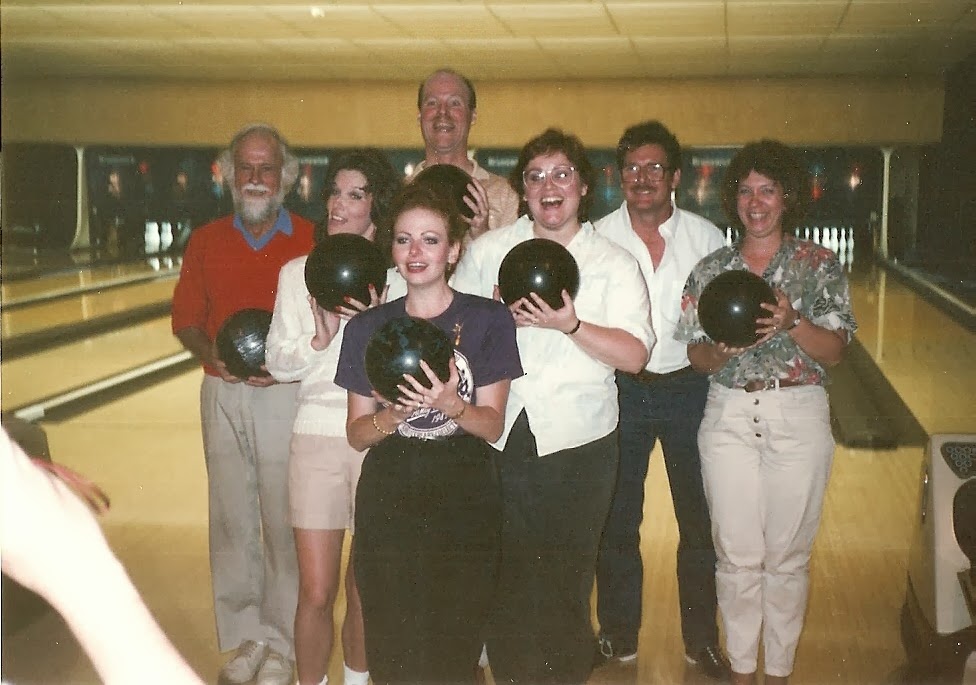
It was an amazing experience. The professional actors were all very down-to-earth and treated us amateurs as equals. (One, I recall, was the daughter of famed travel guide author, Arthur Frommer. I looked up Pauline Frommer while writing this and discovered that some time ago she gave up acting to go into the family business, and is now a well-known travel writer herself.) The pros from New York seemed to enjoy hanging out with us locals—whether it was a picnic in the park before a matinee, or a bowling alley in Niagara Falls after an evening performance. (Bowling, it seemed, was a time-honored tradition for actors who performed at Artpark regularly.)

1989 TSoM Bowling Team

Unfortunately, I don't remember much about the show itself. I do recall several of us listening on the speaker in the green room as our Mother Superior forgot the words to "My Favorite Things" and repeated the same stanza over and over. I also remember that, as a party guest, I had to learn to waltz, and that the song we waltzed to was—you guessed it—"My Favorite Things."

And now that I think about it, I suppose it's not that bad a song. It may not be one of Rodgers and Hammerstein's best, but it's certainly better than "Do-Re-Mi."
Raindrops on roses and whiskers on kittens
Bright copper kettles plus warm woolen mittens
Brown paper packages tied up with strings
These are my favorite things

Cream colored ponies and crisp apple strudels
Doorbells and sleigh bells and schnitzel with noodles
Wild geese that fly with the moon on their wings
These are my favorite things

Girls in white dresses with blue satin sashes
Snowflakes that stay on my nose and eyelashes
Silver white winters that melt into springs
These are my favorite things

When the dog bites, when the bee stings
When I'm feeling sad
I simply remember all of my favorite things
And then I don't feel so bad

Thursday, July 4, 2013

1776


It's Independence Day, and Loretta and I intend to celebrate in the traditional American way—the way our forefathers intended for us to celebrate—cooking outside, eating too much food, and vegging out in front of the TV.

One of the things we will be watching is 1776. We watch it every Fourth of July. When we began this tradition, all we had was a crummy pan-and-scan videotape. However, several years ago we purchased the widescreen, director's-cut DVD, and we can now thrill at the sight of John Adams, Benjamin Franklin, and Thomas Jefferson, all singing at the same time.

William Daniels, Howard Da Silva, and Ken Howard in Widescreen Format

When the film was released, the reviewers were not kind. Roger Ebert called it "an insult to the real men who were Adams, Jefferson, Franklin and the rest." Vincent Canby of The New York Times said, "The music is resolutely unmemorable. The lyrics sound as if they'd been written by someone high on root beer."

As much as I respect Roger Ebert's opinion, I would have to disagree with him on this. And as for Vincent Canby—I would like to ask him how, exactly, someone gets high on root beer. However, I will grant them both that movie musicals are seldom as good as the plays they are based on.

The play premiered on Broadway in 1969. It won three Tony awards, including best musical. I saw the touring production at Chicago's Shubert Theatre when I was in high school. My French class went to see it on a field trip. The play has nothing to do with France, of course; our teacher just wanted to make sure we saw it. (Because that's the kind of fantastic teacher she was.)

Fourteen years later, I played the part of Thomas Jefferson in a dinner theatre production of 1776 in Fort Wayne, Indiana. I was in my early thirties—nearly the same age Jefferson was when he wrote the Declaration of Independence. He was not merely the author, but one of its youngest signers. Today, I could play one the oldest signers. It would be fun to play Benjamin Franklin—he has some of my favorite lines—but I think I would also enjoy the role of Stephen Hopkins, the crusty Rhode Island delegate who is always shouting for rum.

One of Hopkins' lines goes something like this: "I'm going to the tavern. If you need me, you can find me there." The Hopkins in our production had a difficult time with this line. Instead, he would say, "I'm going to the tavern. If you need me, give me a call." The first time he said it in rehearsal, the director politely pointed out that the telephone would not be invented for another hundred years, and everyone got a big laugh out of it. However, it stopped being funny when he continued to botch the line in every rehearsal and even during performances. I'm not sure he ever got it right.

Maybe it was the heat. It was a typically hot, humid Indiana summer, we were all wearing heavy costumes and wigs, and the venue was not air conditioned. This leant authenticity to the opening number—in which Congress complains about the heat, the flies, and John Adams' incessant braying about independence—but made it difficult to concentrate. Whenever we were offstage, our thoughtful stage manager always made sure we drank copious amounts of Gatorade—which in some cases lead to other problems, as we all discovered that it can be difficult dealing with 18th century clothing when one "visits the privy," as they said in those days.

I had my own mishap (thankfully not privy-related) during one performance. It was the scene where Adams and Franklin visit Jefferson in his rooms, to see how the Declaration of Independence is coming along. When the lights come up, I'm scribbling away on a sheet of paper. I then read it, ball it up in disgust, and throw it away. I repeat this procedure several times, until Adams and Franklin enter.

During this particular performance, when the lights came up, I quickly realized that the stage crew had neglected to provide me with a quill. I had plenty of paper, but nothing to write with.

For a moment, I stared at the desk in a panic, trying to think of some business I could do with paper but no quill. Let's see... I could make paper airplanes and throw them at the audience... No, the airplane hasn't been invented yet... I could pretend to write, using my finger... Okay, that's just stupid.

Finally, in desperation, I picked up the stack of paper and threw it in the air.

I learned a valuable lesson that day: Every actor is ultimately responsible for his or her own props. After that, I always made sure I had a quill in my hand before I went onstage, although I needn't have worried. The stage crew never again forgot to leave one on the desk.

They had learned a lesson, too. During the scene break, they had to pick up the paper I left scattered all over the stage.


Thomas Jefferson, with Quill

Saturday, May 18, 2013

My Big Bloody Broadway Musical


Many years ago, when I was a sophomore in college, a theatre classmate and I dreamed of someday writing a musical together. I would write the book and lyrics; he would compose the music. Obviously, we never realized our dream. Otherwise, I would be telling you about the invitation I just received to this year's Tony Awards.

But watching the last season of the NBC series Smash (before I lost interest and quit watching it) re-awakened the dream. Because if those two guys could realize their dream of their musical about—well, whatever their musical was about; I could never quite figure it out—surely I could realize my dream of my musical about whatever I decide my musical is going to be about.

Right now, I'm thinking Psycho.

"Now, hold on there," I hear the naysayers naysaying. "Making a musical about a murderous, knife-wielding psychopath is a terrible idea." Well, I have just two words for those sayers of nay: "Sweeney Todd."

Tony Awards, here I come.

Frankly, I'm surprised no one has thought of it before. I even googled "psycho musical" to see if someone else did think of it. I discovered that someone is currently developing a musical version of Bret Easton Ellis's novel, American Psycho, but apparently no one else has thought to produce a stage musical based on Alfred Hitchcock's seminal 1960 horror film.

Until now.

So far I have one number—well, one verse and a chorus. It's the song that Norman Bates sings to Marion Crane when he's checking her into the motel. The number really cries out for a big chorus, which is problematic, as there is no one on stage except Norman and Marion. However, I was thinking the chorus could be comprised of the stuffed animals in Norman's taxidermy collection, magically come to life (in Norman's mind, of course—for them to actually come to life would just be silly) to join Norman for the big, show-stopping, tap-dancing finale.

By the way, and on a completely unrelated subject, did you know that the title of a song can't be copyrighted?

Be Our Guest

[Norman:]
Welcome to the Bates Motel—
It's great to have you here.
You'll love it; it's a quiet spot.
The beds are soft; the water's hot.
And by the way, I nearly forgot:
Watch out for Mom—
At times she's a bit queer.

[Chorus:]
Be our guest! Be our guest!
Have a shower! Have a rest!
You'll never find a more inviting bed!
Here are towels! Here's a key!
Have a shower! Have a pee!
You'll sleep so well, you'll think that you are dead!

See you at next year's Tonys!

Marion sings the hauntingly beautiful Shower Lament.

Saturday, May 4, 2013

Big Claus and Little Mermaid


I must have been no older than five when my grandfather brought out an old book of Hans Christian Andersen fairy tales and asked me to pick out a bedtime story. I chose one called Little Claus and Big Claus because—silly me—I thought it must have something to do with Christmas. My grandfather obviously was unfamiliar with the story, or he would have insisted that I pick out something more appropriate for children, such as The Tell-Tale Heart.

To this day, I'm not sure why he read it all the way through. He should have stopped when he got to the part where Big Claus brains Little Claus's horse with a hammer. Maybe he wasn't listening to what he was reading, because I distinctly recall that he read it through to the very end before remarking on what a horrible story it was.

Tell me about it. For weeks I had nightmares in which Big Claus was chasing me with his hatchet. It sort of changed the way I felt about Santa, too.

The lesson to be learned here is to never read a child a story you don't already know. Also, never read a child any story—even if you think you know it—that was written by Hans Christian Andersen.

Have you ever actually read The Little Mermaid? It's nothing like the Disney version.

However, if you'd like to see a live performance of The Little Mermaid that is like the Disney version (well, sort of), come see the opening show of the 2013 season of Fairy Tales in the Park, playing in various parks throughout Ventura county this weekend and next.

I guarantee there will be no hatchets.

Cast of The Little Mermaid, including yours truly as Big Claus—I mean, King Triton

Thursday, January 24, 2013

No Curtain


Last week, when blogging about missed entrances, I mentioned the fact that I once missed a curtain call. That wasn't quite accurate. There was no curtain involved.

In fact, most of the shows I have done in the last seventeen years have not involved a curtain. They have either been fairy tales performed outdoors or interactive murder mysteries performed around tables in a banquet room, dining room—or, in this particular case, on a patio.

It was the final performance of the first production of my first mystery script, The Last Cruise of the S.S. Minnow, at Dakota's Steak House in Simi Valley, California. Our previous performances had been in the second-floor banquet room, but on this particular night the banquet room had been booked for another function, and we had been moved to the patio at the back of the restaurant. This wasn't a problem. The weather was beautiful, as it nearly always is in Southern California. We had to make some minor adjustments for entrances and exits, but everything went just fine, right up to my death scene.

(I always prefer to play the victim. It means fewer lines to memorize.)

I timed it so that when I was shot ("by a .22 caliber revolver—a weapon easily handled by a man or a woman"), I would end up next to the buffet table. Then, when no one was looking, I could discretely roll under the table, crawl out the other side and into the shrubbery, then make my way around to the front entrance of the restaurant and hang out in the bar until curtain call.

At least that was the plan.

I was shot, I fell, and I rolled under the table—just as planned. I crawled a few feet, then, when I thought I could no longer be seen by the audience, I attempted to get to my feet, while still moving forward. In doing so, I learned a valuable lesson:

One should never attempt to move in more than one direction at a time.

I lost my balance, stumbled a few feet, and fell to the ground on my hands and knees. "That could have been worse," I thought, as I began to pick myself up. Dakota's was perched on top of a hill. I counted myself lucky that I didn't roll all the way to the bottom.

Then I looked down and noticed that there was something odd about the little finger of my left hand. It was bent to the side at 90-degree angle, and I could see a little bit of bone peeking out through a hole in the skin.

"That's not right," I thought.

There was hardly any blood and no pain. At the time, my only concern was how this would affect the show. At least I had no other scenes—just the curtain call. I picked myself up and made my way to the front of the restaurant.

One of the restaurant's owners happened to be in the foyer, talking to some of the staff. "Adam," I said to him, holding up my finger, "I'm afraid I've hurt myself."

"That's great!" he said, laughing. "What is it, plastic?"

"No," I said. "It's my finger. I fell on it."

He immediately stopped laughing and arranged for a staff member to drive me to the emergency room.

As it turned out, the finger wasn't broken (only dislocated), and I still felt no pain (only embarrassment). The doctor cleaned the wound, shot some anesthetic into it, popped the bone back into the knuckle, and neatly stitched up the hole. He explained that the reason I felt no pain was that I was in shock, and he gave me some powerful pain killers for later. They came in handy when I was awakened in the middle of the night by my finger screaming obscenities at me.

But for now, I felt fine. I had missed the curtain call, but I was damned if I was going to miss the cast party.

Especially when I had such a good story to tell.

Saturday, January 19, 2013

The Invisible Man Award


Most of my nightmares are about theatre, and most of my theatre nightmares are about missing an entrance. In my nightmares, it's never my fault: someone has taken my costume, my makeup, my prop. The one time it actually happened, I had no one to blame but myself—well, myself and one of my fellow actors, who shall remain nameless. (Mainly because I can't remember his name. He was playing the role of an English lord, so I shall refer to him as "His Lordship.")

I was playing the role of Johnny Tarleton, son of underwear tycoon John Tarleton. The play was Misalliance, by George Bernard Shaw—a play that is chiefly remembered as the source of the oft-parodied line delivered by my character, "Anybody on for a game of tennis?" It was the second semester of my freshman year of college, my third show, and my biggest role yet.

During this particular performance, His Lordship and I were chatting in the green room, waiting for our entrance. We were probably talking about the ceramic bowl I was supposed to have smashed in the previous scene. (It worked in rehearsal, but in every single performance, no matter how hard I threw the thing to the floor, it would not break. At the final performance, I hurled it with such force it bounced off the floor, ricocheted off a flat, and rolled off the stage—finally coming to rest against the foot of an audience member in the front row.)

The green room was separated from the stage by some distance; a speaker on the wall allowed actors awaiting their entrance to listen for cues. At some point in our conversation, His Lordship and I simultaneously noticed that there was no dialogue coming from the speaker. After making sure the speaker was functioning properly, we simultaneously came to the realization that the reason there was no dialogue was that the actors who were supposed to be speaking were not on stage, and that those actors were us. We dashed down the long, dark corridor to the wings and made our breathless entrance, much to the relief of the actors onstage, who were desperately trying to improvise in the style of George Bernard Shaw.

At the theatre department award ceremony at the end of the school year, His Lordship and I were dubiously honored with "The Invisible Man Award."

* * * * *

Anyone who has been on the stage will agree that, as embarrassing as it is to be the Invisible Man, it is much worse being onstage when someone else misses an entrance. Karma dictated that sooner or later it must happen to me—as it did just a few years later, during a community theatre production of Chekov's Three Sisters.

There were four of us on stage that evening, waiting for the Invisible Man. Fortunately, all of us were reasonably seasoned actors with the good sense to keep calm and remain in character. The man and woman playing clandestine lovers flirted shamelessly. I, seated between them and playing a shy, awkward military officer, acted shy and awkward—an easy task when you are sitting between two people who are flirting shamelessly. The fourth member of our quartet, who was playing a broody, dangerous military officer, sat in the corner and brooded dangerously. We were all, if I may say so myself, brilliant. I doubt if Anton Chekov himself would have realized that anything was wrong. I'm fairly certain the audience didn't. (Unless they happened to be "theatre people." Theatre people usually notice when something goes wrong during a performance because they expect something to go wrong during a performance. They know that something goes wrong during every performance. It's one of the cardinal rules of theatre.)

Finally, after what seemed an eternity but was probably only a minute or two, our Invisible Man entered and the play continued.

* * * * *

I am proud to say that, since receiving my one and only Invisible Man Award, I have never missed another entrance—although I did, due to a spectacular display of clumsiness, once miss a curtain call.

But that's another story.

Saturday, October 20, 2012

Who Killed Eddie Munster and Fester Addams?


This month, I've been posting excerpts from my Addams Family Mystery. If you haven't read my last two posts, I suggest you start here. Last week's installment ended with FBI agent Marilyn Munster's interrogation of the suspects. At the end of the interrogation scene, the audience are given several minutes to fill out their resolution forms. Typically, all of the actors leave the room during this time, so the audience can't badger them with more questions. When the resolution forms have been completed and collected, the actors return for the resolution scene.
 
As I explained in last week's post, it is the custom for victims in our mysteries to "die" near an exit, so that the "body" may be easily removed. At Dakota's Steakhouse, where An Addams Family Mystery was first performed twelve years ago, the séance table was on a raised platform on the opposite end of the dining room from the exit. Because of the logistics involved in getting a body (a heavy body) down off the platform and through the dining room to the exit, it was decided to just cover Fester with a tablecloth and leave him "onstage" for the rest of the show. This worked so well that we kept it in for future productions of the show. Director John Diesel also came up with the brilliant idea of having Wednesday give Fester a new face during the interrogation scene:


I think the biggest challenge I have ever had to face as an actor was to sit perfectly still and play a corpse for what seemed like an eternity, but was in reality about half an hour. It was particularly difficult when the other actors were out of the room, and the audience were filling out their resolution forms. (We always announced that they would be given five minutes, but it usually ended up being closer to ten or fifteen.) Audience members would come up and examine the corpse, saying things like, "He's breathing!" (What did they expect!?) Some of them even poked me. It was sheer torture, and I couldn't wait for the rest of the actors to return for the resolution scene, because then I knew that the show was almost over...

MARILYN:  Ladies and gentlemen, it's time to solve this mystery. Who killed Eddie Munster and Fester Addams? Members of the family, as I call out your names, please take the same seat you had during the séance: Gomez Addams, Morticia Addams, Grandmama Addams, Wednesday Addams. I was sitting here, on Fester's right. The seats were marked with place cards. Morticia, who was responsible for our seat assignments?

MORTICIA:  Grandmama.

MARILYN:  Grandmama, was there any reason that you put us in these particular seats?

GRANDMAMA:  Not really. I usually make it boy-girl-boy-girl, but there were too many girls. Why?

MARILYN:  Well, it seems to me that who was seated where is sort of important.

MORTICIA:  Oh? And why is that?

MARILYN:  First of all, neither Wednesday nor I could have done it. We were both seated next to Fester; the trajectory would be wrong.

GOMEZ:  That's true.

MARILYN:  That leaves three people: Morticia, Gomez and Grandmama. Now, Gomez says that something tickled his nose, causing him to sneeze. Is that correct?

GOMEZ:  Yes.

MARILYN:  There's one thing that hasn't been explained: the sound Wednesday heard before Gomez sneezed. "FFFT." Morticia, you didn't hear it, did you?

MORTICIA:  No.

MARILYN:  Grandmama, you were sitting next to Wednesday. Perhaps you can enlighten us?

GRANDMAMA:  What? All right, so I have a gas problem. That's what happens when you get old.

MARILYN:  I don't think what Wednesday heard was a gas problem. What she heard was the sound of you puffing something in Gomez's face—probably pepper.

GRANDMAMA:  That's ridiculous!

MARILYN:  I would guess the pepper was packed in a small tube of paper, which you concealed in the left corner of your mouth. After blowing it at Gomez to initiate his sneeze, you swallowed it, waited for the sneeze to give you your diversion, shot Fester, then dropped the gun.

GRANDMAMA:  You're crazy! The peroxide has affected your brain!

MARILYN:  Why don't we take a look in Gomez's mustache? I'm sure we'll find a few flakes of pepper. But only on the right side—the side you were sitting on.

GRANDMAMA:  Crap!

GOMEZ:  Mama!

GRANDMAMA:  I'm sorry, Gomez. The bitch is right.

MARILYN:  You killed Eddie to stop him from marrying Wednesday. That much I can understand. But to kill your own son…

GOMEZ:  That wasn't very motherly of you, Mama.

GRANDMAMA:  I know, Gomez, I know. It was one of the hardest things I've ever had to do. I loved Fester. But I had to do it.

MARILYN:  Because he was about to reveal that you were Eddie's murderer?

GRANDMAMA:  You think you have all the answers, don't you, Blondie? Well, you're wrong! I would never have killed Fester to protect myself. I did it to protect him—and you.

MARILYN:  Protect me? From what?

GRANDMAMA:  From the curse!

MARILYN:  What do you mean?

GRANDMAMA:  I saw the way he was looking at you, mooning over you. I'd seen him that way before, you see—when he was in love with Lily Munster!

MARILYN:  Fester and Aunt Lily?

GRANDMAMA:  That's right. It was twenty-one years ago. Fester was young and foolish, and your Aunt Lily…

GOMEZ:  Was a fox!

MORTICIA:  Gomez!

GOMEZ:  Well, she was.

MARILYN:  Aunt Lily? A fox?

GRANDMAMA:  More accurately, a wolf. Lily had werewolf blood, and so naturally she was drawn to Fester, who carried the same curse.

GOMEZ:  Fester was a werewolf?

GRANDMAMA:  Not full-blooded, but he had enough of the wolf in him to be a problem when the moon was full—and during mating season.

MORTICIA:  That explains that one magical night.

GOMEZ:  What one magical night?

MORTICIA:  It's time I told you, darling. It happened about ten years ago. There was a gorgeous full moon, and I decided to go for a walk in the cemetery. I came upon Fester by the old mausoleum. The smell of deadly nightshade was in the air, and there was a strange light in Fester's eyes. Our passions ignited—we couldn't control ourselves!

GOMEZ:  Tish! How could you?

MORTICIA:  I don't know. I'm sorry darling. At that moment, there was just something about Fester that I couldn't resist. Je ne sais quoi, mais oh-la-la!

GOMEZ:  French!

MORTICIA:  Later, mon cher.

MARILYN:  Of course! Pheromones!

GRANDMAMA:  What?

MARILYN:  Pheromones.

GOMEZ:  Is that French?

MARILYN:  Pheromones are chemical substances given off by an animal to attract the opposite sex. We humans have all but lost them—or covered them up with cologne, deodorants and aftershave. But in werewolves they must be much stronger. That explains why I was attracted to Fester.

GRANDMAMA:  Well, whatever you call it, no mortal can resist it. It was what drew me to Fester's father.

GOMEZ:  Papa was a werewolf?

GRANDMAMA:  Not your father, Gomez. I never told you, but you and Fester are half-brothers.

GOMEZ:  Mama, this all comes as something of a shock. Is there anything else you haven't told us?

GRANDMAMA:  There's one more thing, but I think everyone's figured it out.

GOMEZ:  I haven't. What is it?

MARILYN:  Eddie was Fester's son.

GOMEZ:  Caramba! Did Fester know?

GRANDMAMA:  Please! You know how naïve Fester was. He believed babies were delivered by the stork until he was thirty. But he had an instinctive liking for Eddie; he was always defending him. And I'm sure Eddie was a good boy. But he was a werewolf, and I couldn't allow him to marry Wednesday—not after the hell I went through with Fester's father.

MARILYN:  Did you kill him, too?

GRANDMAMA:  He begged me to. It was the only way to end the curse. He wanted me to kill Fester, too, but I couldn't do it.

MARILYN:  Until now.

GRANDMAMA:  Until now. And now the curse is finally ended.

MARILYN:  I'm sorry, but I'm afraid I'll have to take you in, Mrs. Addams.

GRANDMAMA:  You do what you gotta do, Blondie. Can I speak to Wednesday first?

MARILYN:  Of course.

GRANDMAMA:  Wednesday, I'm sorry about all of this. Someday, you'll forgive me, and you'll find someone else. But please make sure he's not a werewolf.

MORTICIA:  Or an insurance salesman.

GOMEZ:  A lawyer would be good. Your grandmama could use one of those right now.

MARILYN:  Ladies and gentlemen, this concludes the Addams Family Mystery!

At this point, Fester would stiffly "rise from the dead" for bows, and the winner—the person who came closest to the correct solution—would be announced.

How close did you come to solving the mystery?

Saturday, October 13, 2012

Death at a Séance


Last week, I posted the first part of my Addams Family Mystery. This week, I'll continue the story...

Scene 3 opens with Fester attempting to comfort Wednesday over the loss of her boyfriend, Eddie Munster. Fester confides that he, too, has experienced true love, but it didn't work out, as she "loved someone else."

Wednesday has become a little loopy on the pills prescribed by Dr. Crane. ("The blue ones are for when I'm sad, the yellow ones for when I'm anxious, and… I forget what these little pink ones are for, but they're pretty, aren't they?") Concerned that Wednesday may accidentally overdose, Marilyn confiscates her pills.

Fester tells the family that, for Wednesday's sake, they should be trying to help Marilyn solve the mystery. Grandmama suggests the best way to help might be to contact Eddie through a séance. It seems that Fester is a professional medium, although his results can be unpredictable. (At the family's last séance, he accidentally channeled Jack the Ripper, and "it took days to clean up the mess.")

Dessert is served during the scene break. If it's your birthday or anniversary, the family will sing you their special birthday/anniversary song. Please sing along if you know it, and don't forget to snap your fingers—
Da-da-da-dum.
Da-da-da-dum.
Da-da-da-dum, da-da-da-dum, da-da-da-dum.

A happy, happy birthday (anniversary).
From the Addams Family.

Da-da-da-dum.
Da-da-da-dum.
Da-da-da-dum, da-da-da-dum, da-da-da-dum.
Also at this time, audience members are encouraged to bribe their favorite character for an additional clue using play money. The bribe clues are as follows:

GOMEZ:  Our family credo is: "We gladly feast on those who would subdue us."
MORTICIA:  An Addams marry a Munster—never!
WEDNESDAY:  Wednesday's inner child is full of woe.
FESTER:  I don't know anything about genetics, but Eddie seemed like a nice kid.
GRANDMAMA:  I can no longer protect my son!
MARILYN:  Doesn't Fester have the most soulful eyes you've ever seen?

At the beginning of the séance scene, the actors take their seats at a small table for six. Because the seating arrangement is somewhat important to the plot, here's a diagram:


In most of our mysteries, the victim "dies" in front of the audience (preferably next to an exit, to make it easier to remove the body), but the shots come from offstage, with all of the suspects out of the room. This time, I wanted the murder to take place with all of the suspects in the room. Of course, the only way to achieve this was to have the scene take place in the dark...

FESTER:  Quiet everyone! Would someone dim the lights, please?

MARILYN:  Should we hold hands?

FESTER:  That won't be necessary. Just place your hands lightly on top of the table. (Fester begins to make an eerie moaning sound, then says, in a memorable voice…) Eenie Meenie Chili Beanie! The spirits are about to speak!

MARILYN:  What's happening?

GRANDMAMA:  Fester is getting in touch with his spirit guide.

MARILYN:  His spirit guide is Bullwinkle?

MORTICIA:  Don't be silly! Bullwinkle was a cartoon character. Fester's spirit guide is Bill Scott.

MARILYN:  Who?

GOMEZ:  Bill Scott. The voice of Bullwinkle.

MARILYN:  I see.

MORTICIA:  But he prefers to be addressed as Bullwinkle.

MARILYN:  Oh.

GOMEZ:  It was his greatest role.

MARILYN:  Of course.

MORTICIA:  Bullwinkle? Can you hear me, Bullwinkle?

FESTER:  Yes, I hear you.

MORTICIA:  How are you, Darling?

FESTER:  Dead.

MORTICIA:  Of course you are, dear. But your spirit will always live on.

GOMEZ:  We always look forward to your appearance in the Thanksgiving Day Parade, old boy.

FESTER:  Thank you.

MORTICIA:  Bullwinkle, darling, we're looking for a recent arrival…

GOMEZ:  He should have come in today. The name's Eddie…

FESTER:  Hold on… Is there an Eddie here?… Eddie?… (his voice changes) That's a lovely dress you're wearing, Mrs. Cleaver.

MORTICIA:  Not Eddie Haskell! Eddie Munster!

FESTER:  (Bullwinkle again) Oh. Hold on a minute… (different voice) Hello?

WEDNESDAY:  Eddie? Is that you?

FESTER:  Hi, Wednesday.

WEDNESDAY:  What's it like, Eddie?

FESTER:  I see dead people.

GOMEZ:  You are dead people.

WEDNESDAY:  I miss you, sweetiepateetie.

FESTER:  I miss you, too, cutiepatootie.

MORTICIA:  Ugh! I think I'm going to be sick.

GOMEZ:  This is worse than Jack the Ripper.

MARILYN:  Eddie, do you know who this is?

FESTER:  Sure! Hi, Marilyn!

MARILYN:  Eddie, what's my middle name?

FESTER:  Grizelda.

ALL:  Grizelda?

MARILYN:  It's true. It must really be Eddie. Eddie, are you still there?

FESTER:  Yes.

MARILYN:  Do you remember being shot?

FESTER:  I'd prefer to forget it, but yes, I remember.

MARILYN:  Did you see who shot you?

FESTER:  Yes.

MARILYN:  Who was it?

FESTER:  It was…

(Gomez sneezes loudly.)

FESTER:  Gezundheit.

(A shot is fired; Wednesday screams.)

MARILYN:  Fester! Lights! Somebody turn on the lights!

(The lights come up, revealing Fester slumped over the table. Marilyn is standing over him, checking for a pulse. Wednesday's hands are covering her mouth. Gomez holds a napkin to his face. Morticia is clutching Gomez's arm. Grandmama's hands are on the table, and she is halfway out of her chair.)

MARILYN:  Nobody move!

GRANDMAMA:  Fester! Is he…dead?

MARILYN:  I'm afraid so, Mrs. Addams. (She removes something from the back of the chair.) A silver bullet! (She quickly scans the table, then gets down on her hands and knees and looks beneath it. When she gets to her feet, she is holding a gun wrapped in a napkin. She unwraps it, examines it and sniffs the barrel.) The murder weapon—no doubt the same gun used to kill Eddie Munster. And one of you four is the killer!

(Gomez, Morticia and Grandmama begin protesting. Wednesday repeats "poor Uncle Fester, poor Uncle Fester…" Marilyn sits Fester up and covers him with the tablecloth. Wednesday becomes occupied with the cloth covering Fester. The audience can't see what she is doing.)

MARILYN:  Ladies and Gentlemen, may I have your attention, please? I regret to announce that Fester Addams is dead. Like my cousin Eddie, he was shot with a silver bullet from a 22-caliber handgun—obviously by someone sitting at this table. I will now conduct my interrogation, and, when I have finished with each suspect, you will have an opportunity to ask your own questions. First, Gomez Addams.

GOMEZ:  At your service.

MARILYN:  Did you object to Wednesday's relationship with Eddie?

GOMEZ:  Naturally.

MARILYN:  Why?

GOMEZ:  Because Mama and Morticia told me to.

MARILYN:  Let's talk about the séance. Your sneeze seemed very well-timed.

GOMEZ:  What do you mean?

MARILYN:  It created the perfect distraction for the killer. Or perhaps you faked the sneeze and shot Fester yourself?

GOMEZ:  I most certainly did not!

MARILYN:  You just coincidentally had to sneeze at that particular moment?

GOMEZ:  Yes. Something tickled my nose.

MARILYN:  I see. Well, it's an impossible shot, anyway, I suppose.

GOMEZ:  What do you mean?

MARILYN:  To fire under the table like that—without even aiming—and put the bullet straight through Fester's heart? Come on! Nobody could do that except by pure luck.

GOMEZ:  On the contrary. I could make that shot ten times in a row, without deviating a millimeter from the target.

MORTICIA:  Gomez!

GOMEZ:  Well, I could. It's simply a matter of feeling the relative positions of your weapon and the target. The same theory applies to blindfolded knife-throwing, a skill at which I also excel.

MARILYN:  What about Morticia? Could she do it?

GOMEZ:  She's a better shot than I am.

MORTICIA:  Gomez!

GOMEZ:  Now don't be modest, Querida.

MARILYN:  Wednesday?

GOMEZ:  Not quite as accurate, but I'll wager she could hit it four times out of five.

MORTICIA:  GOMEZ!

GOMEZ:  All right, maybe nine times out of ten.

MARILYN:  And what about your mother?

GOMEZ:  Are you kidding? Mama could outshoot anybody in the room.

GRANDMAMA:  Gomez, will you shut up!

GOMEZ:  I was just trying to be helpful.

GRANDMAMA:  Well don't!

MARILYN:  Are there any other questions for Gomez? (She fields questions from audience.) Thank you, Mr. Addams. Morticia Addams?

MORTICIA:  Yes?

MARILYN:  You objected to Wednesday's relationship with my cousin, didn't you?

MORTICIA:  I certainly did.

MARILYN:  On what grounds?

MORTICIA:  On every possible grounds.

MARILYN:  Could you be a bit more specific?

MORTICIA:  Well, let's just say he wasn't really Addams material—no offense.

MARILYN:  None taken. I consider it a compliment.

MORTICIA:  What do you mean by that?

MARILYN:  Oh, nothing. It's just that I'd rather be a poor, working-class stiff than a spoiled, idle snob with a stick up my ass, that's all—no offense.

MORTICIA:  (through gritted teeth) None taken.

MARILYN:  Would you describe what happened during the séance, just before Fester was killed?

MORTICIA:  Gomez sneezed. I handed him a napkin.

MARILYN:  Did you hear anything else before the shot was fired?

MORTICIA:  No.

MARILYN:  Thank you. Are there any other questions for Morticia? (Marilyn fields questions from the audience.) Thank you, Morticia. Mrs. Addams—what is your first name, by the way?

GRANDMAMA:  Babette.

MARILYN:  Babette? Do you mind if I call you Grandmama?

GRANDMAMA:  Whatever floats your boat, Blondie.

MARILYN:  Did you object to Wednesday's relationship with Eddie?

GRANDMAMA:  Of course I did.

MARILYN:  Why?

GRANDMAMA:  He was a werewolf. Werewolves are bad news.

MARILYN:  You sound as though you speak from personal experience.

GRANDMAMA:  I do.

MARILYN:  What sort of experience?

GRANDMAMA:  Personal.

MARILYN:  Would you tell us what you heard before Fester was shot.

GRANDMAMA:  I heard Gomez sneeze, and I heard a shot.

MARILYN:  Anything else?

GRANDMAMA:  No.

MARILYN:  Thank you. Any other questions for Grandmama? (She fields questions from the audience.) Wednesday Addams?

(No response. Wednesday is in her own world.)

MARILYN: Wednesday? What are you doing?

(Wednesday moves the cloth covering Fester, revealing a smiley face she has drawn on it over Fester's face.)

MARILYN:  Wednesday, could you answer a few questions for me?

WEDNESDAY: Sure, Marilyn. How are you Marilyn?

MARILYN:  I'm fine, Wednesday.

WEDNESDAY:  Are you sure? I know how you felt about Uncle Fester. You shouldn't keep your feelings inside, you know. Feelings are like butterflies, (beginning to sing) and butterflies are free to fly, fly away, high away…

MARILYN:  Honestly, Wednesday, I'm okay.

WEDNESDAY:  How about a pill?

MARILYN:  We took your pills away from you, remember?

WEDNESDAY:  (pulling out another pill box) Oh, I still have some herbals from Dr. Wong. (conspiratorially) Don't tell Dr. Crane; he doesn't believe in them.

MARILYN:  Give me the pills, Wednesday.

WEDNESDAY:  Let's see… (she begins handing out pills to guests, in a parody of Ophelia's mad scene in Hamlet) There's ginkgo, that's for remembrance—pray you, love, remember. And there is St. John's Wort, that's for thoughts.

MARILYN:  Give me the pills.

WEDNESDAY:  Oh, all right. (She hands the pills to Marilyn.)

MARILYN:  (patiently, as though talking to a small child) Now, Wednesday, I want you to think back to the séance.

WEDNESDAY:  What séance?

MARILYN:  The séance we just had—when Uncle Fester was killed.

WEDNESDAY:  Oh, yeah. That was so sad.

MARILYN:  Yes, it was. Now, do you remember what happened, just before Fester was shot?

WEDNESDAY:  You were talking to Eddie. Eddie's dead. That's so sad.

MARILYN:  Yes, it is. Then what happened?

WEDNESDAY:  Someone sneezed. I think it was Father.

MARILYN:  Yes. Then what?

WEDNESDAY:  There was a shot.

MARILYN:  Do you remember anything else unusual before the shot?

WEDNESDAY:  No….yes. There was a sound.

MARILYN:  What kind of sound?

WEDNESDAY:  (imitating the sound) FFFT!

MARILYN:  Was this before or after the sneeze?

WEDNESDAY:  Before.

MARILYN:  Are there any other questions for Wednesday? (Marilyn fields questions from the audience.) Thank you Wednesday. You've been very helpful. Ladies and gentlemen, I now know who the killer is. Do you? You have five minutes to fill out your resolution forms. Good luck, and may the best detective win!

Have you figured out who killed Eddie Munster and Fester Addams and the motives for their murders? Next week, I'll present the solution to An Addams Family Mystery!